Portrait of Dhirajzen Bagawath Geetha Kumaravel

Open to full-time DV/RTL roles

Hi, I'm DhirajzenVerifying digital designs, and building AI tools that make it faster.

Aspiring ASIC Design Verification Engineer · Brooklyn, NY

View my work Resume

Selected work

UVM testbench: a sequencer and driver stimulate the AXI4 slave, a monitor feeds a reference-model scoreboard and coverage, and 14 assertions sit on the interface axi_env axi_agent sequencer driver monitor DUT axi_slave axi_if · 14 SVA scoreboard ref model · per-beat coverage covergroups + cross 3 RTL bugs found 8 tests · Xcelium

Featured · Design verification

Burst-capable AXI4 slave, verified in UVM

A UVM testbench strict enough to catch three real RTL bugs, each reproducible with its own failing test.

  • 3RTL bugs found
  • 14SystemVerilog assertions
  • 100%functional coverage
  • 8tests on Xcelium
  • SystemVerilog
  • UVM
  • AXI4
  • SVA
  • Cadence Xcelium

Clock domain crossing

Dual-clock async FIFO, proven with SVA

A parameterized async FIFO checked by a bind-attached assertion suite across five write/read clock ratios.

  • 14assertions
  • 8cover properties
  • 5clock ratios
  • SystemVerilog
  • SVA
  • CDC
  • Cadence Xcelium

AI for verification

LLM assistant for spec Q&A and coverage gaps

Grounded answers from the 500-page ARM AXI4 spec, plus an agent that turns coverage holes into UVM stimulus ideas.

  • LangChain
  • LangGraph
  • RAG
  • ChromaDB
  • Claude
What I built
  • Built a RAG pipeline over the 500-page ARM AXI4 specification using LangChain, ChromaDB, and Claude, with regex preprocessing, semantic chunking, and MMR retrieval for grounded spec Q&A.
  • Designed an agentic coverage gap analyzer in LangGraph that parses functional coverage reports and suggests UVM constrained-random stimulus to close uncovered bins.

Protocol verification

SPI controller UVM environment

Self-checking SPI scoreboard validating CPOL/CPHA modes against a reference memory model.

  • SystemVerilog
  • UVM
  • SPI
  • Functional Coverage
What I built
  • Developed a UVM environment for an SPI controller with constrained-random read/write transactions and functional coverage tracking CPOL, CPHA modes.
  • Designed a self-checking scoreboard using a 32×8 reference memory model validating readback correctness through reset recovery and corner-case timing scenarios.

Videos

I explain digital design and verification concepts on YouTube, worked through step by step from first principles.

Latest · SystemVerilog

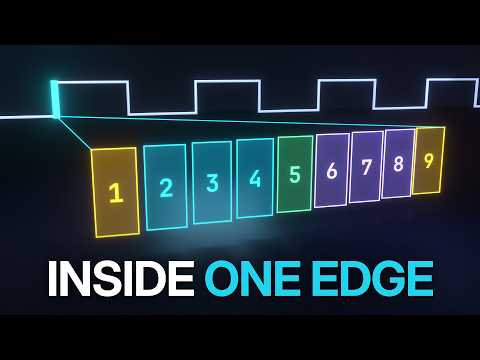
SystemVerilog Scheduling Regions, Visualized: The Stratified Event Queue

A 15-minute explainer on what a simulator does inside one moment of simulation time. It walks through the 9 scheduling regions step by step, showing where race conditions come from and how nonblocking assignments, $strobe, clocking blocks and deferred assertions avoid them. Every result is checked against a model of the IEEE 1800-2023 scheduler.

Verification sign-off

How Chip Teams Decide Verification Is Finished: Sign-Off Criteria

Testing can never prove a chip has no bugs, so how does a DV team decide it’s done? Covers the verification plan, code vs functional coverage, three ways to close a coverage hole, mutation testing, bug-rate curves and the sign-off review, with a simulated FIFO bug as the running example.

Verification case study

Why Random Tests Missed Intel’s $475M Bug (Coverage & Formal Proofs)

A design verification case study of the Pentium FDIV bug, built on my own bit-level model of its SRT divider: why 1,000,000 random tests never touched the 5 defective table cells, and how coverage and formal proofs catch bugs like it.

Interview prep

FIFO Depth Calculation: 8 Interview Traps (and How to Beat Them)

One idea answers every version of “how deep must this FIFO be?”: it only has to hold the backlog that builds while writes outpace reads. It solves the standard case, then works through eight traps, from idle cycles and the 2X trap to back-to-back bursts and async margin.

Clock domain crossing

Async FIFO Explained: Gray Code, Synchronizers and the Full-Flag Twist

Builds an asynchronous FIFO step by step to show how data crosses safely between two unrelated clocks: the lap bit, metastability and the two-flop synchronizer, why a binary pointer going from 7 to 8 can arrive as 15, and how Gray code fixes it.

Reliability & ECC

How a Single Bit Changed an Election Count: Error Correcting Code (ECC) Explained

A 2003 Belgian election gave one candidate exactly 4,096 extra votes: 212, a single flipped bit. What a bit flip is, how chips survive one with parity and ECC, and how verification engineers use fault injection to prove every flip gets fixed or caught.

Subscribe on YouTube

About

Dhirajzen at his NYU graduation

I recently completed my MS in Computer Engineering at NYU Tandon. I specialize in ASIC Design Verification — UVM, SystemVerilog, and constrained-random verification across industry-standard protocols — and I build LLM/RAG tooling on top of that workflow to cut down manual toil in spec lookup, stimulus generation, and coverage closure.

I also explain digital design and verification concepts on YouTube — from FIFO sizing and clock domain crossing to ECC, the Pentium FDIV bug and how SystemVerilog schedules events.

What I do

Build verification environments

UVM testbenches with constrained-random stimulus, self-checking scoreboards and reference models, driven to coverage closure.

  • UVM
  • SystemVerilog
  • Verilog
  • Constrained-Random Verification
  • Scoreboarding
  • Reference Modeling
  • Functional & Code Coverage
  • Coverage Closure

Prove it with assertions

Protocol rules, clock domain crossings and corner cases, pinned down with SVA so a bug can't slip through quietly.

  • SystemVerilog Assertions (SVA)
  • Assertion-Based Verification
  • Clock Domain Crossing (CDC)
  • AXI4
  • AXI4-Lite
  • APB
  • SPI
  • I2C

Automate the toil

Scripts and LLM tooling that take over the repetitive parts: regressions, grading pipelines, spec lookup and coverage analysis.

  • Python
  • Tcl
  • Make
  • Linux
  • Git
  • LangChain
  • LangGraph
  • RAG
  • ChromaDB
  • Prompt Engineering
  • Anthropic API

Explain it clearly

Turning tricky hardware concepts into explanations people remember, on YouTube and in the lab as a course assistant.

  • YouTube Explainers
  • Lab Manuals
  • RTL & Testbench Debugging
Toolbox
Cadence Xcelium · SimVision · IMC · Synopsys VCS · Design Compiler · Genus · Innovus · Virtuoso · OpenLane · Xilinx Vivado
Hardware concepts
RTL Design · Microarchitecture · Clock Domain Crossing (CDC) · Static Timing Analysis (STA)

Journey

  1. 2020 – 2024

    BE, Electronics & Communication Engineering

    College of Engineering Guindy, Anna University · CGPA 8.51/10

    Digital System Design, Digital VLSI, Linear ICs, Operating Systems, Machine Learning, Advanced Microcontrollers.

  2. 2024 – 2026

    MS, Computer Engineering

    NYU Tandon School of Engineering · CGPA 3.87/4.0

    Generative AI Based Chip Design, SoC Design, Computing Systems Architecture, VLSI Systems & Architecture.

  3. Jun 2025 – May 2026

    Course Assistant, VLSI System & Architecture Design

    New York University

    Automated a Python grading pipeline that batch-compiles and simulates student RTL in Synopsys VCS; wrote lab manuals and debugged student RTL and testbenches during lab hours.

  4. Now

    Open to full-time DV/RTL roles

    Looking for ASIC design verification and RTL roles. Get in touch.